


Pick up any event licensing application that requires a crowd safety plan and you are holding, without knowing it, the accumulated output of several named investigators working through the aftermath of specific catastrophes. The requirement didn’t emerge from industry reflection. It was written into law by people who were not event organisers, who had no stake in the business of producing shows, and whose professional obligation was to find out exactly what went wrong and prevent it from happening again.
That distinction matters more than most event professionals acknowledge. The protocols enforced at every major show today were authored, clause by clause, by investigators, crowd scientists, and municipal regulators responding to disasters. Understanding who wrote those rules, under what circumstances, and from which specific findings is the only honest basis for enforcing them well, adapting them intelligently, and knowing when they need to go further.
The Document That Changed Architecture
In January 1990, Lord Justice Taylor published his Final Report on the Hillsborough stadium disaster. The disaster itself had occurred nine months earlier, on 15 April 1989, when 97 Liverpool FC supporters died in a crush at Hillsborough Stadium in Sheffield during an FA Cup semi-final. Taylor had spent those nine months conducting one of the most rigorous independent safety investigations in British public life, examining ground layouts, stewarding practices, crowd flow, communication failures, and the physical characteristics of standing terraces.
His report made 76 recommendations. The most consequential was a mandate that all top-division football grounds in England become all-seater stadiums.
That single recommendation physically changed the built environment of British sport. Every major English football ground that now exists in its current form does so because a judge concluded, on the basis of evidence gathered in the aftermath of a single disaster, that standing terraces were incompatible with safe crowd management. Taylor didn’t suggest it as best practice. He recommended it as policy, the government legislated accordingly under the Football Spectators Act 1989, and the construction programmes that followed remade the sport’s infrastructure permanently.
The all-seater stadium is not a product of the football industry deciding that seats were a good idea. It is architecture authored by an investigator.
How the Pattern Begins: Cincinnati, 1979
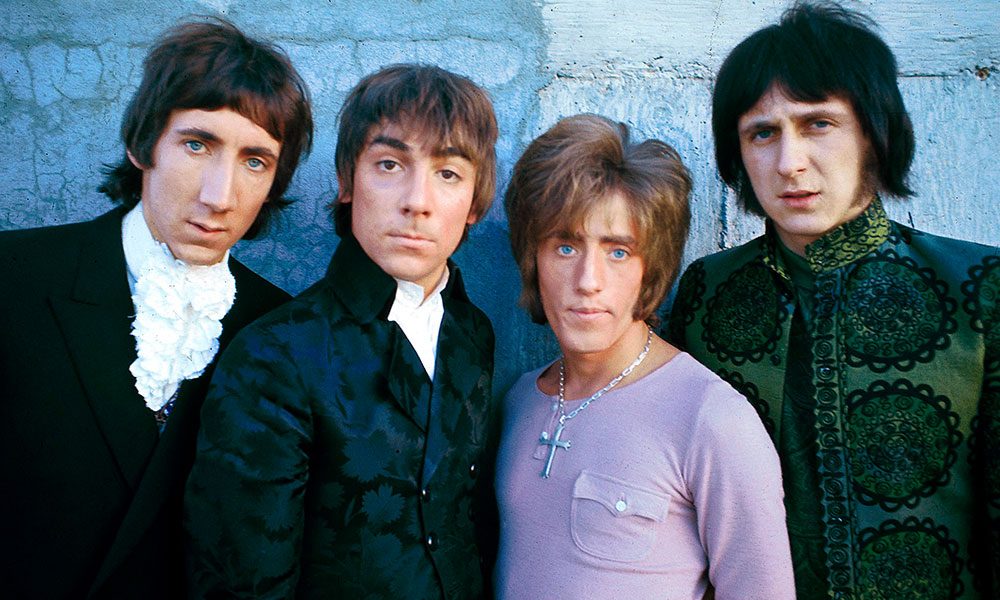
The mechanism Taylor deployed had a precedent, though it came from a different country and a different kind of venue. On 3 December 1979, eleven people were killed in a crowd crush outside Riverfront Coliseum in Cincinnati, Ohio, before a concert by The Who. The cause was what was then called “festival seating,” an arrangement where tickets were sold without reserved places, meaning the crowd gathered at the doors and surged inward when they opened.
Cincinnati’s post-event analysis, which fed into broader municipal and state-level review, produced a response that was local in its initial reach but nationally significant in its precedent: the city reportedly banned festival seating at large indoor venues, a restriction that persisted for decades. The festival seating format, which had been a standard commercial decision made by promoters, became legally prohibited on the basis of what investigators concluded it had caused.
The Cincinnati case established something the event industry has never fully absorbed: that a specific event format, adopted by organisers for commercial or operational reasons, can be abolished entirely by regulators who determine it is structurally dangerous. The organisers did not reform the format voluntarily. The format was taken from them.
That same logic sits inside every crowd safety requirement currently attached to an event permit.
The Scientists Behind the Standards
Between the Cincinnati ruling and the Taylor Report’s implementation, and accelerating through the 1990s and 2000s, a parallel development was happening in research. Crowd dynamics was becoming a scientific discipline, and its practitioners were doing something event organisers had never done systematically: they were modelling what crowds actually do under pressure, building mathematical frameworks for density thresholds, flow rates, and the physics of human compression.
Dr. G. Keith Still’s crowd dynamics research, widely cited in event licensing across the UK and internationally, established methodologies for assessing crowd risk that are now embedded in licensing processes as standard practice. Professor Ed Galea at the University of Greenwich developed crowd evacuation modelling research that has since been cited in post-event legal proceedings, bridging academic analysis and regulatory application.
Neither of these researchers was an event organiser. Their work was produced in universities, tested against historical disaster data, and then adopted by licensing authorities. The event industry did not commission this science. It was delivered to the industry by regulators who had decided that empirical crowd modelling should underpin safety requirements.
The Purple Guide, published by the Events Industry Forum and running to over 600 pages, is the primary UK reference document for health, safety, and welfare at music and outdoor events. It draws directly on this accumulated scientific and regulatory output. Event professionals who use it as a planning tool are reading the distilled findings of decades of post-disaster review, academic crowd research, and independent investigation, most of which they have never read in its original form.
The Astroworld Chapter: Disaster Meets Documentation
On 5 November 2021, ten people died in a crowd crush at the Astroworld Festival at NRG Park in Houston, Texas. The disaster followed a pattern recognisable from Cincinnati and Hillsborough: a crowd compressed beyond safe density thresholds, response systems that failed to identify or address the compression quickly enough, and a chain of operational decisions that had created the conditions before the event began.
What was historically distinctive about Astroworld was not the scale but the documentation. The post-event debrief process was conducted in an era of immediate video evidence, disclosed internal communications, and litigation that generated an unusually detailed public record of what had gone wrong. Houston Fire Department and Harris County officials conducted formal after-action reviews. Live Nation Entertainment, the primary promoter according to multiple reports, subsequently announced enhanced safety commitments, reportedly including provisions for independent safety managers and real-time crowd monitoring.
Houston revised its large-event permitting requirements following the disaster, introducing new provisions around crowd management plans and medical staffing ratios. These are regulatory changes, not industry pledges. They follow the same structural path as the Cincinnati ban and the Taylor mandate: independent analysis finds the failure, regulators translate the findings into requirements, and the requirements become the new baseline.
The difference is pace and public visibility. The Astroworld review process produced more documented analysis within its first two years than Hillsborough produced in its first decade, partly because litigation forced disclosures and partly because the social media record created an unprecedented volume of contemporaneous evidence. The debrief happened faster, louder, and in partial public view.
Whether that changes its durability is the question the industry is currently answering.

The Five-Year Test
Crowd safety history offers a reasonably consistent measure of whether post-disaster reforms stick. Cincinnati’s festival seating ban held for decades before the question of festival seating formats resurfaced in other jurisdictions. The Taylor Report’s all-seater mandate was implemented across English top-division grounds through the 1990s and has never been reversed. In both cases, the critical period was roughly five years after the investigation published its recommendations: the window during which regulatory energy either translates into permanent structural change or dissipates into advisory guidance.
August 2026 is that window for Astroworld. The civil litigation that followed the disaster is approaching resolution in significant portions. Municipal permitting changes in Houston are now two to three years old, enough time to assess whether they are being enforced consistently or whether they exist mainly on paper. Live Nation’s announced safety commitments are old enough to evaluate against actual practice at events they have since promoted.
The five-year test is not a metaphor. It is a documented pattern. Reforms introduced in the immediate aftermath of a disaster, when institutional attention is high and public scrutiny is intense, face their first serious pressure at the point when that attention fades. Hillsborough’s lasting architectural legacy was the result of legislated mandates, not voluntary industry commitment. Cincinnati’s legacy endured because it was municipal law. The durability of Astroworld-era reforms depends, in a measurable way, on whether the changes made to Houston’s permitting code and to large-event planning requirements elsewhere have been absorbed into licensing practice or are still being treated as additional requirements that might, under pressure, be watered down.
That is a live professional question, not a historical one.
The Obligation of Inherited Standards
Every event operations professional who submits a crowd safety plan as part of their licensing application is administering someone else’s post-disaster findings. The plan requirement didn’t come from the industry’s own reflection on best practice. It came from investigators who determined that the absence of such a plan had contributed to deaths.
Knowing that provenance changes what it means to enforce the standard. A professional who understands which requirements trace to the Taylor Report, which reflect Cincinnati’s regulatory legacy, and which were introduced or accelerated by Astroworld’s post-event findings is not just compliant. They understand the reasoning behind the requirement, which means they can apply it intelligently when circumstances don’t fit the template, extend it when the template is inadequate, and make the argument for it when someone with budget authority wants to cut corners.
The investigators who wrote these requirements are largely unknown to the professionals who enforce them. Lord Justice Taylor has been dead since 1994. The crowd scientists whose density thresholds appear in licensing guidance are academics most event directors have never heard of. Their work is present in every crowd safety plan submitted anywhere in the UK, and in much of what Houston now requires. The profession was constituted by their findings, and the professionals who inherited that constitution owe it more than passive compliance.
Frequently Asked Questions
Q: Where did the requirement for a crowd safety plan actually come from?
A: The formalisation of crowd safety plans as a mandatory licensing requirement was driven, in the UK, by a series of post-disaster reviews, with the Taylor Report of 1990 as the foundational document. In the US, the Astroworld post-event reviews and Houston’s subsequent permitting revisions represent the most recent significant addition to this requirement. The concept did not originate with the event industry.
Q: What did the Taylor Report actually change about event safety?
A: The Taylor Report made 76 recommendations following the 1989 Hillsborough disaster. The most architecturally significant was the all-seater stadium mandate for top-division English football grounds, which was subsequently legislated. It also addressed stewarding standards, communication systems, and crowd capacity management in ways that influenced broader event safety regulation beyond football.
Q: What changes to event permits followed Astroworld?
A: Houston revised its large-event permitting requirements following the November 2021 disaster, introducing new provisions around crowd management plans and medical staffing ratios. Live Nation reportedly committed to enhanced measures including independent safety managers and real-time crowd monitoring. Some of these changes are documented in updated municipal requirements; others remain in the form of industry commitments whose enforcement is less straightforward to verify.
Q: Why does the five-year mark after a disaster matter for event safety reform?
A: The historical pattern suggests that post-disaster reforms either become permanent regulatory fixtures or fade to advisory guidance within roughly five years of the original event. Cincinnati’s festival seating ban and the Taylor Report’s all-seater mandate both held because they were legislated rather than voluntary. August 2026 represents the equivalent period for Astroworld-era reforms, making it a genuine test of whether those changes have been absorbed into standard practice.
Q: Who are the key figures behind modern crowd safety science?
A: The investigators and researchers whose work underpins current crowd safety standards include Lord Justice Taylor, whose 1990 report constituted modern UK stadium safety law; Dr. G. Keith Still, whose crowd dynamics research is widely used in event licensing; and Professor Ed Galea at the University of Greenwich, whose evacuation modelling has been cited in post-event legal proceedings. The Event Safety Alliance has been a significant voice in the US context, particularly following Astroworld.
2026 Is Not a Retrospective
The Astroworld-era reforms are at their most vulnerable right now, in the way that all post-disaster reforms are most vulnerable when the urgency fades. The professionals who understand what the Taylor Report actually mandated, and why, are the ones best positioned to ensure that the equivalent requirements from 2021 and 2022 are applied with the same rigour a decade from now.
The practical step is straightforward: locate the post-event report most directly relevant to your current event format. If you work in the UK, that means knowing which sections of the Purple Guide trace to which investigations. If you operate in the US, that means understanding what Houston’s revised permitting requirements now specify and what the post-Astroworld findings actually concluded. If you run events governed by stadium safety legislation, the Taylor Report itself is a short document and worth reading in full.
The requirement to submit a crowd safety plan exists because investigators found that its absence contributed to deaths. That is not inherited common sense. It is a specific finding in a named report. The professionals who know that are the ones equipped to extend it where it doesn’t yet reach far enough.