
Whether you are planning your first event or managing multiple projects at once, knowing what to ask is only part of the challenge.
The real difficulty is making sure nothing is missed.
Important details often sit across emails, notes, and conversations. Requirements change. Assumptions slip in. And time is lost chasing information that should have been clear from the start.
A structured questionnaire brings everything together.
It gives you a simple, consistent way to gather the right information, stay organised, and move forward with confidence, whatever type of event you are planning.
This guide shares practical pre-event and post-event questions you can use straight away, along with links to ready-to-use templates designed for different event types.
Why Event Questionnaires Matter at Every Level
Event questionnaires are not just for large agencies or complex events.
They are just as valuable for:
- Individuals planning weddings or private celebrations
- Teams organising internal or client-facing events
- Schools, charities, and community groups
- Experienced planners managing multiple projects
Without a clear structure, common issues appear:
- Key details are missed or assumed
- Information is collected inconsistently
- Planning becomes reactive rather than proactive
- Feedback is informal or difficult to compare
A well-structured questionnaire helps you stay clear, organised, and in control from the outset.
A Simple Structure That Works for Any Event
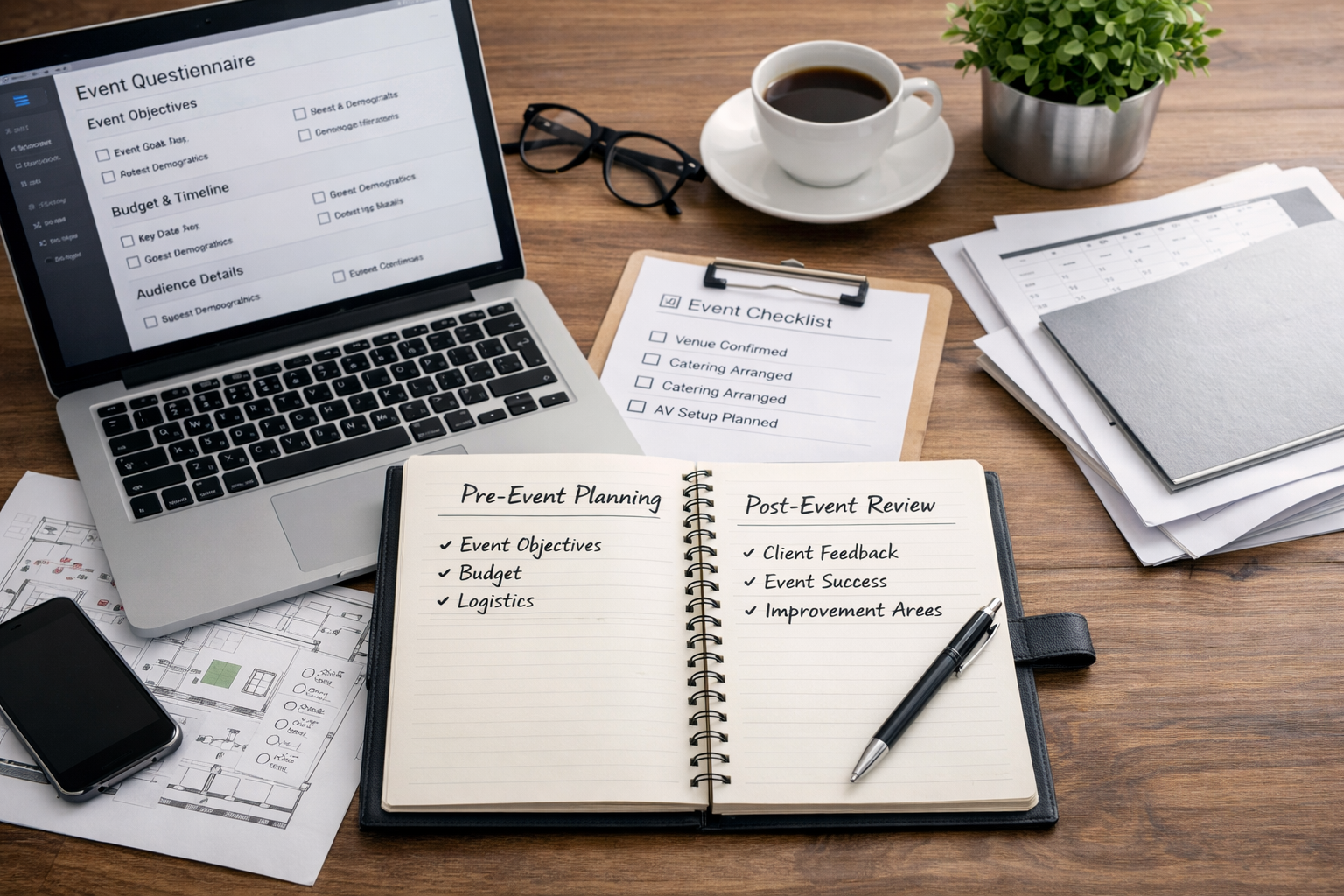
Rather than treating questionnaires as a single document, it is more effective to break them into stages:
Pre-Event
Capture requirements, preferences, and constraints before planning begins
Post-Event
Gather feedback, measure success, and identify improvements
This structure works across all event types, from corporate events to weddings, community events, and virtual experiences.
Pre-Event Questionnaire Examples
Pre-event questions help you define what you are planning, who it is for, and what matters most.
Event Purpose and Goals
- What is the purpose of the event?
- What does success look like for you?
- Are there any specific outcomes you want to achieve?
Guests and Experience
- Who is the event for?
- What type of experience do you want to create?
- Are there any specific expectations for guests?
Budget and Priorities
- What is your budget range?
- What are your top priorities for the event?
- Where are you willing to be flexible?
Logistics and Planning Details
- Do you have a confirmed date and venue?
- Are there any key deadlines to work towards?
- Are there accessibility or special requirements to consider?
Personalisation and Preferences
- Are there dietary requirements or food preferences?
- Are there cultural, religious, or personal considerations?
- Are there any special requests we should plan for?
Use Templates for Different Event Types
While these questions provide a strong starting point, most events require more tailored detail.
For example:
- Food and meal selection questionnaires
- Special requests and preferences forms
- Guest information collection
- Event-specific planning forms
You can explore a full range of pre-event questionnaire templates here:
These templates are designed for different event types, making it easier to collect the right information without starting from scratch.
Post-Event Questionnaire Examples
Post-event questions help you understand what worked, what did not, and how to improve future events.
Overall Experience
- How would you rate your overall experience?
- Did the event meet your expectations?
Experience and Engagement
- What did you enjoy most about the event?
- Did you feel engaged and included throughout?
Organisation and Delivery
- How well organised did the event feel?
- Was information clear before and during the event?
Content and Value
- Was the event valuable or useful to you?
- Was the content relevant and engaging?
Improvements and Feedback
- What could be improved for future events?
- Is there anything that stood out positively or negatively?
Tailored Feedback for Different Event Types
Different events require different types of feedback.
For example:
- Corporate events focus on value, relevance, and outcomes
- Weddings and private events focus on experience and atmosphere
- Community and charity events focus on engagement and impact
- Education events focus on clarity, communication, and understanding
- Virtual events focus on accessibility and technology
Using tailored post-event questionnaires allows you to gather more meaningful insights.
You can explore ready-to-use post-event templates for each of these scenarios here.

Bringing Structure to Your Event Planning
As your events become more complex, relying on memory or informal notes becomes harder to manage.
A structured approach allows you to:
- Collect consistent information every time
- Reduce back-and-forth communication
- Keep all details in one place
- Improve the experience for both planners and attendees
Whether you are planning a single event or managing many, structure creates clarity.
From Questions to Repeatable Systems
The real value of questionnaires comes from using them consistently.
Templates help you:
- Start quickly without building from scratch
- Adapt questions for different event types
- Maintain a professional, organised approach
- Scale your planning without increasing complexity
They turn one-off questions into a reliable process.
Explore Event Questionnaire Templates
If you want a more structured way to plan and evaluate your events, using ready-made templates is the simplest place to start.
You can access a full library of event questionnaire templates, covering pre-event and post-event scenarios across multiple event types, here:
https://envitely.com/event-questionnaire-templates/
Copy, adapt, and use them in a way that fits your workflow, so every event starts with clarity and ends with insight.